
If you have ever claimed Child Benefit or cared for someone between 1978 and 2010, you may have heard about Home Responsibilities Protection (HRP). HRP was meant to protect your State Pension when you were not working because you were caring for children or a sick or disabled person.
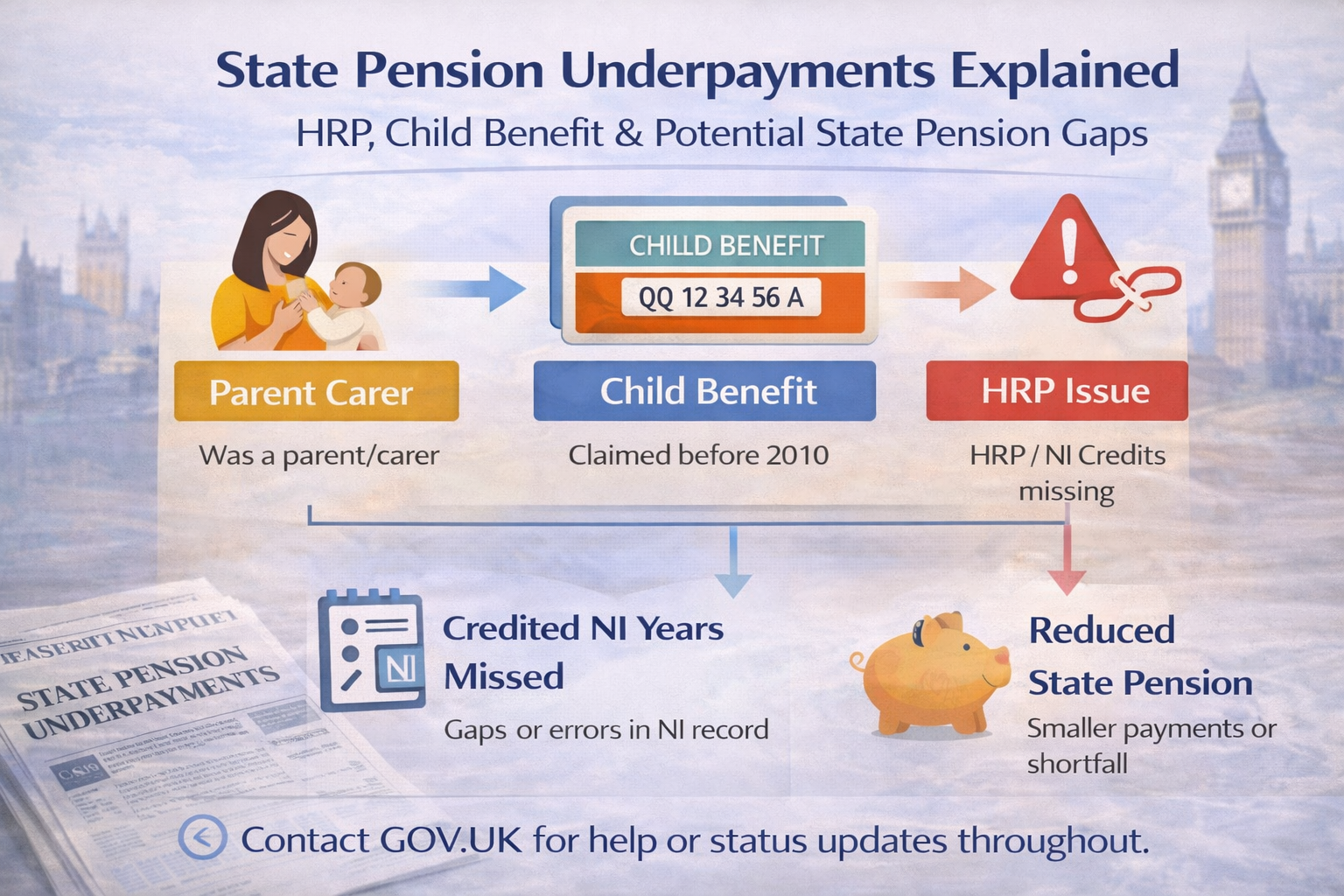
The problem: in many cases HRP was not recorded correctly on a person’s National Insurance (NI) record, especially for people who claimed Child Benefit before May 2000. That can mean a lower State Pension and (for some people) back pay.
This blog explains the latest official numbers published by government, what those numbers actually mean, and what you can do today if you think HRP is missing from your NI record.
The latest official HRP progress numbers (and why they matter)
The most recent government “management information” update on HRP State Pension underpayments was published on GOV.UK on 22 May 2025. It reports progress up to 31 March 2025.
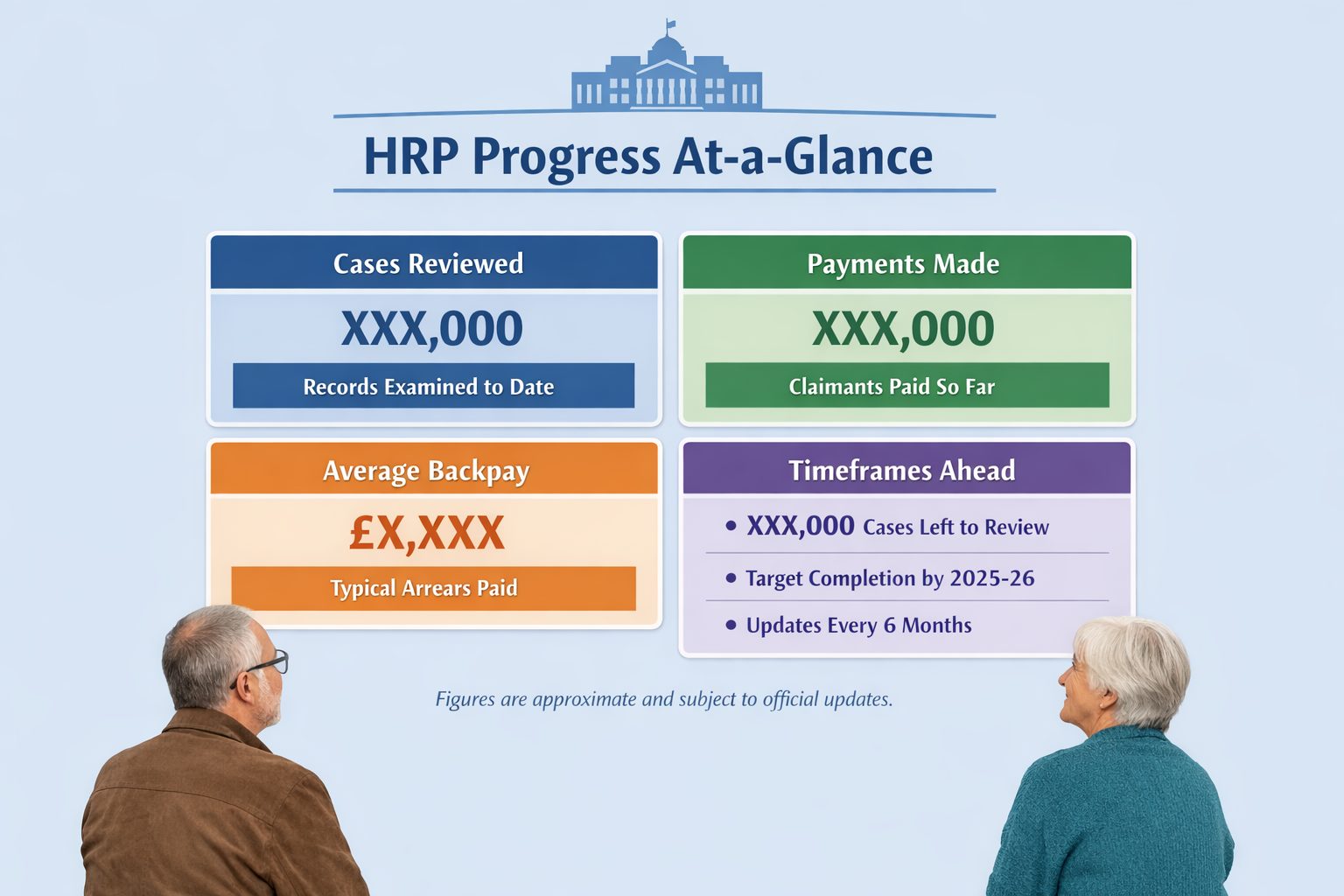
In that period, the exercise identified 12,379 underpayments and paid around £104 million in arrears (back pay). The average arrears payment reported was £8,377 (this average includes cases where arrears were £0 because of other benefits).
Key numbers at a glance (official figures to 31 March 2025):
|
Measure |
Official figure |
|
HMRC letters sent to people who may be affected |
370,018 |
|
HMRC applications processed (under State Pension age) |
8,639 |
|
HMRC applications processed (over State Pension age) |
44,296 |
|
DWP cases received from HMRC |
22,781 |
|
DWP cases processed |
21,878 |
|
Cases where arrears were identified |
12,379 |
|
Total arrears paid |
£104m |
|
Average arrears paid |
£8,377 |
How to read these numbers (plain English)
It helps to think of the HRP correction process as a funnel:
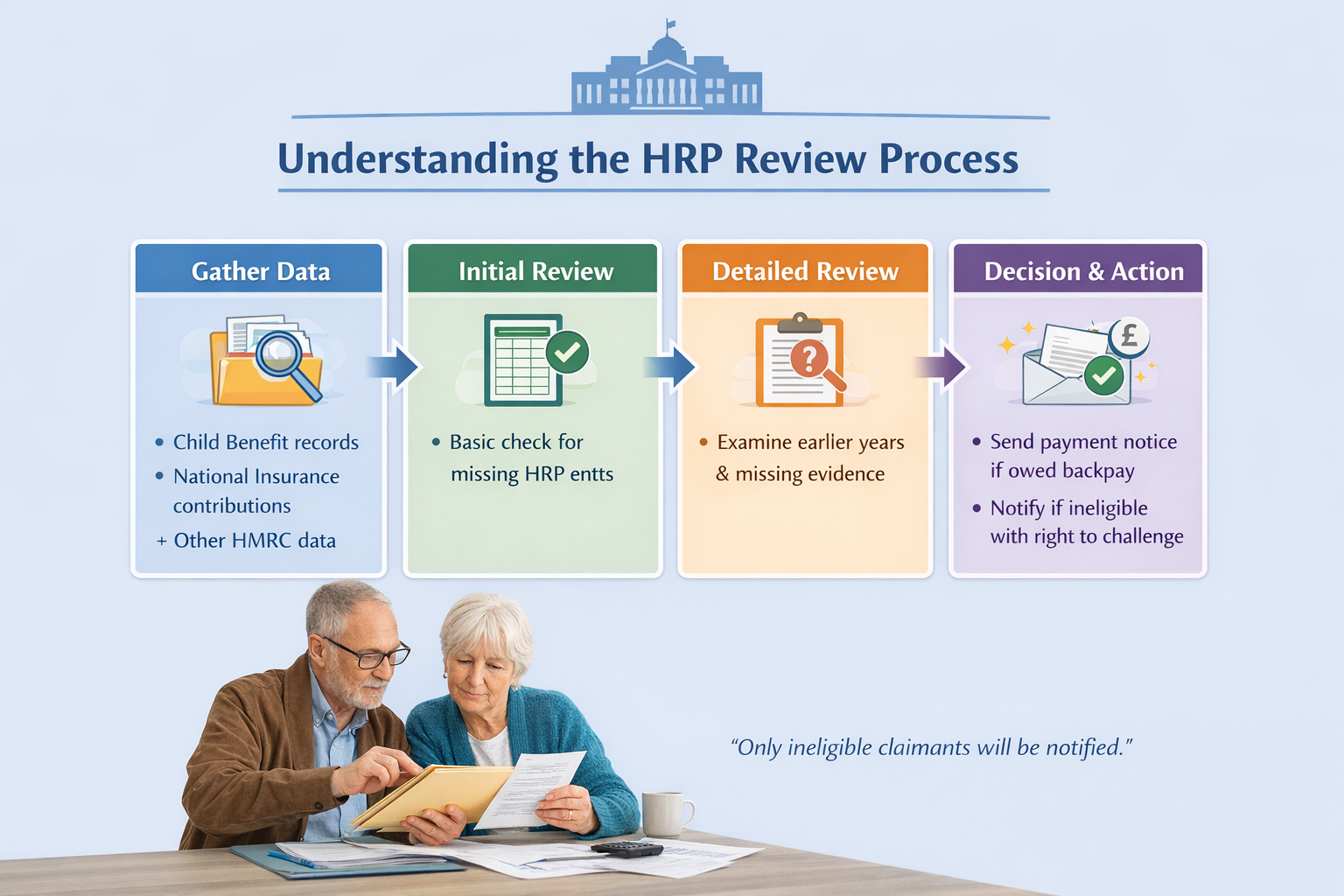
- Letters and awareness: HMRC wrote to people who might be affected. Not everyone who received a letter will be missing HRP.
- Applications: People must apply to have missing HRP added to their NI record (usually online, or by post using form CF411).
- NI record update: HMRC checks the application and, if accepted, updates the NI record for the relevant years.
- State Pension correction: If you are already receiving State Pension, DWP uses the updated NI record to recalculate your pension and pay any arrears due.
- No arrears in some cases: Some people will not receive arrears even if HRP is corrected (for example, if they already had enough qualifying years for a full pension).
Why the numbers can feel ‘low’ compared to headlines
You may have seen articles suggesting that “hundreds of thousands” could be affected. Government evidence given to a Parliamentary committee referred to an earlier estimate of “up to 210,000” people potentially underpaid due to HRP recording errors. But the same evidence also explains a key point: many people did not go on to submit an application after receiving letters or seeing the eligibility checker.
That does not mean the issue has gone away. It means the system is largely “claim-led”: if you do not apply, your record may never be corrected.
Who should take this seriously (quick checklist)
- You claimed Child Benefit for a child under 16 at any time between 1978 and 2010, especially if your first Child Benefit claim was before May 2000.
- You reduced work or stopped working to care for a child or a sick/disabled person in those years.
- Your NI record shows gaps, or your State Pension forecast looks lower than expected.
- Child Benefit was paid in your spouse/partner’s name, even though you were the main carer (HRP may need to be transferred).
What to do today (step-by-step)
- Step 1 — Check your NI record
Log in to your HMRC Personal Tax Account to view your National Insurance record and your State Pension forecast. Look for years between 6 April 1978 and 5 April 2010 where you were caring but your record does not show a qualifying year or credits.
- Step 2 — Use the official HRP eligibility checker
GOV.UK provides an HRP eligibility checker. It helps you decide whether you should apply.
- Step 3 — Apply to add (or transfer) missing HRP
If you are eligible, apply online or by post using form CF411. GOV.UK’s ‘Apply for Home Responsibilities Protection’ guidance explains what evidence you may need, including what to do if you are applying on behalf of someone who has died.
- Step 4 — If you are already receiving State Pension, expect DWP to reassess once HMRC updates your record
After HMRC updates your NI record, DWP can recalculate your State Pension and pay arrears where due. Keep copies of what you submit and any reference numbers.
Common mistakes that delay HRP corrections
- Missing identity links: name changes (marriage/divorce), old addresses, or incomplete dates can stop records matching.
- Not listing all children (names and dates of birth) when applying based on Child Benefit.
- Assuming a letter is a scam and ignoring it. GOV.UK and HMRC have published guidance about the HRP campaign and how to check you are not missing payments.
- Expecting instant results: HRP updates involve HMRC (NI record) and then DWP (State Pension). Timescales vary.
Frequently asked questions
- Does HRP still apply after 2010?
HRP only covered the period 6 April 1978 to 5 April 2010. From 6 April 2010, National Insurance credits replaced HRP for most people.
- I claimed Child Benefit after May 2000 — am I affected?
The main HRP recording issue discussed in government updates relates to Child Benefit claims before May 2000, when National Insurance numbers were not always captured in the same way. If you first claimed Child Benefit after May 2000, it is less likely you are affected by this specific recording issue, but you can still check your NI record.
- Can I apply on behalf of someone who has died?
Yes. GOV.UK guidance explains that applications on behalf of someone who has died must be made by post, and you should include a letter confirming you are the personal representative.
- Will fixing HRP reduce my other benefits?
An increased State Pension can affect means-tested benefits (for example Pension Credit) because those benefits depend on your income. If you receive any means-tested support, consider getting advice before spending any arrears.
Check eligibility in 60 seconds
Official sources and links
- Home Responsibilities Protection (HRP) State Pension underpayments: LEAP exercise to 31 March 2025 (official figures) — https://www.gov.uk/government/publications/home-responsibilities-protection-hrp-state-pension-underpayments-progress-on-cases-reviewed-to-31-march-2025/home-responsibilities-protection-hrp-state-pension-underpayments-leap-exercise-to-31-march-2025
- Apply for Home Responsibilities Protection (how to apply online or by post using CF411) — updated 17 Feb 2026 — https://www.gov.uk/guidance/apply-for-home-responsibilities-protection
- Home Responsibilities Protection (HRP) overview (what HRP is and why NI numbers matter) — https://www.gov.uk/home-responsibilities-protection-hrp
- HRP eligibility checker (official GOV.UK page) — https://www.gov.uk/home-responsibilities-protection-hrp/eligibility
- State Pension underpayments: progress on cases reviewed to 31 March 2025 (wider LEAP exercise totals) — https://www.gov.uk/government/publications/state-pension-underpayments-progress-on-cases-reviewed-to-31-march-2025/state-pension-underpayments-progress-on-cases-reviewed-to-31-march-2025
- Parliamentary evidence referencing HRP estimates and outreach (Work and Pensions Committee oral evidence, Jan 2026) — https://committees.parliament.uk/oralevidence/17140/pdf/
- HMRC/DWP news: ‘Check you’re not missing State Pension payments’ (HRP campaign) — https://www.gov.uk/government/news/check-youre-not-missing-state-pension-payments
Image credits (for this draft)
- Photo 1: “an old woman using a laptop” by Centre for Ageing Better (Unsplash). Source: https://unsplash.com/photos/pm5V4RP2zN4
- Photo 2: “Three older adults are looking at a paper.” by Age Cymru (Unsplash). Source: https://unsplash.com/photos/hqq2aIEURNA