
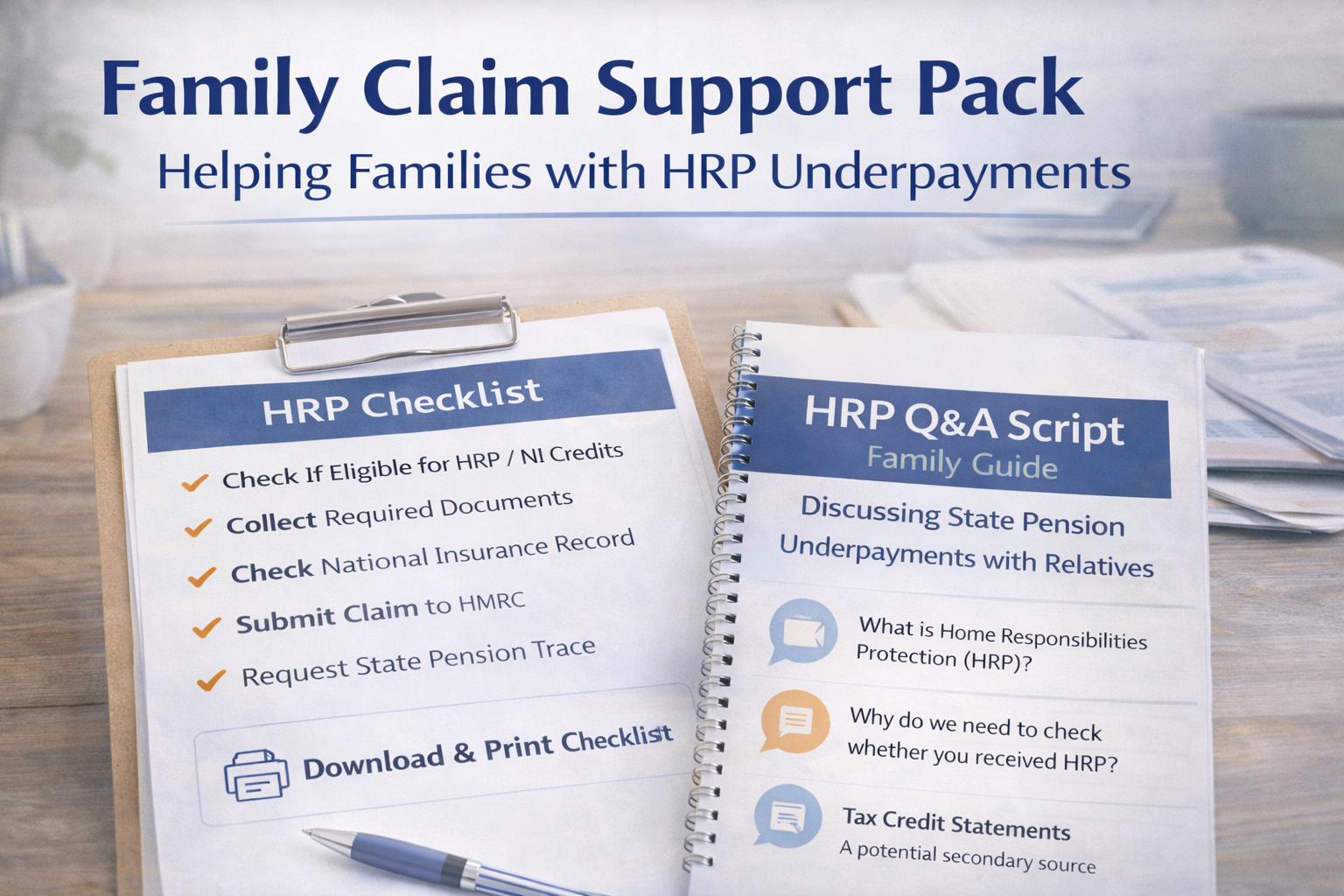
Many people only discover HRP when a family member spots that Mum or Dad’s State Pension looks lower than expected, or their National Insurance (NI) record shows gaps during years they were caring for children. This support pack is designed for families - the adult child, spouse, sibling, or trusted friend - who are helping someone else check things calmly and correctly.
Everything here is written in plain English, with links to the official GOV.UK pages you may need. Where a form or document is mentioned, follow the GOV.UK guidance for the most up-to-date version.
1. Quick refresher: what HRP is (and who it helps)
Home Responsibilities Protection (HRP) helped protect State Pension entitlement for people who were not paying full National Insurance because they were caring for children or someone with a disability or illness. HRP applied for tax years from 6 April 1978 to 5 April 2010. After that, HRP was replaced by National Insurance credits.
The most common issue is that HRP years did not get correctly linked to the person’s NI record - especially for some Child Benefit claims that started before May 2000 (when NI numbers were not always captured or matched properly).
2. The 10-minute family checklist (do this before you start)
|
Gather these details first (as best you can):
|
3. Common questions families ask (with official answers)
Q1) How do we check if HRP is missing?
The quickest way is to look at the person’s National Insurance record and (if possible) their State Pension forecast. You are looking for gaps or missing credits during years when they were caring and receiving Child Benefit. GOV.UK explains how to view your NI record and check your State Pension.
Q2) What if they cannot use the internet or do not have a Government Gateway login?
That is common. A family member can still help by gathering paper evidence and using the official postal routes if needed. GOV.UK guidance for HRP explains how to apply and what to include. If you are acting for someone who lacks capacity, seek appropriate legal authority (for example, a Power of Attorney) before managing their affairs.
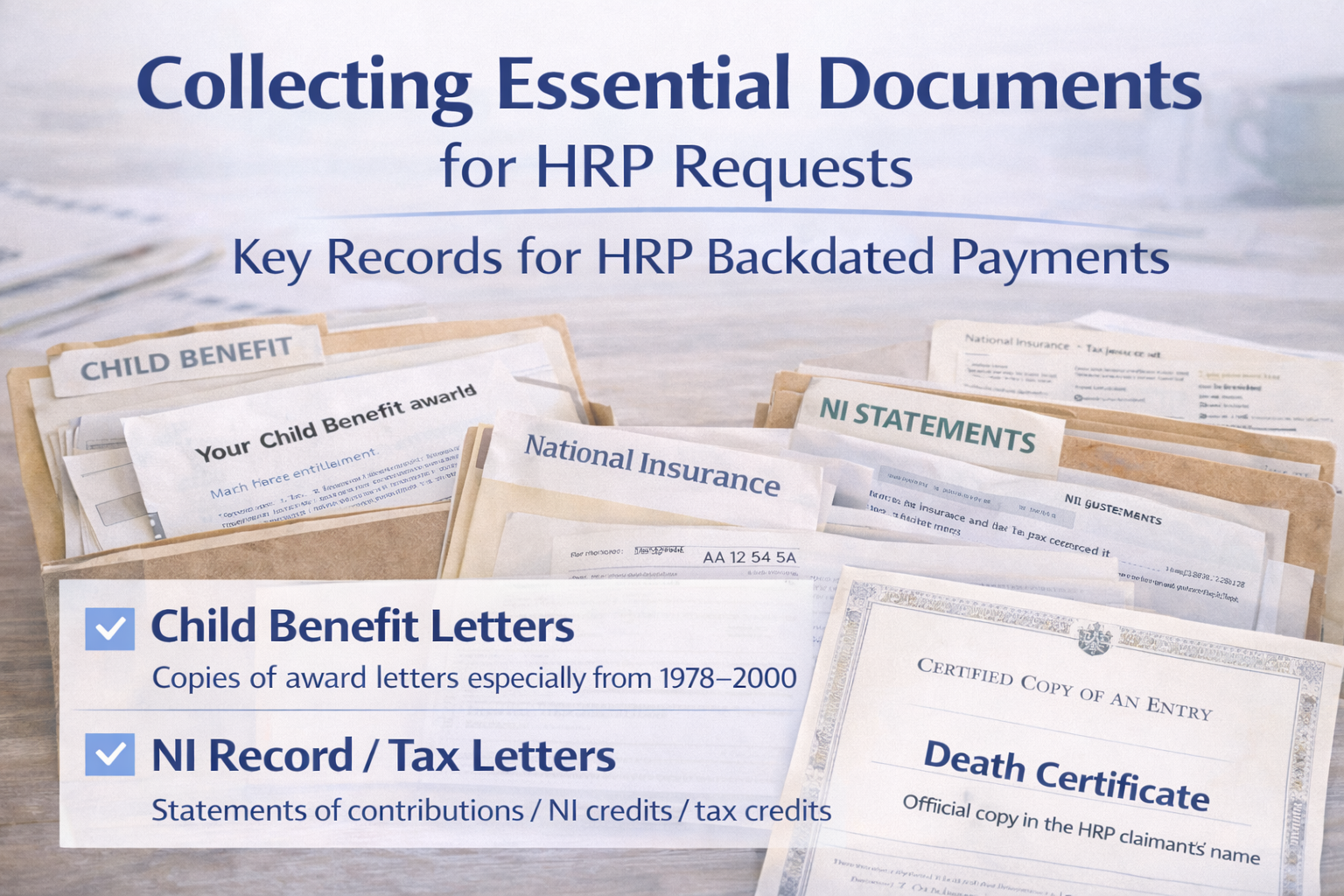
Q3) What evidence helps if Child Benefit letters are missing?
Old Child Benefit letters are helpful, but they are not the only way to support a claim. Useful alternatives can include bank statements showing Child Benefit payments, letters from HMRC, school or GP letters that confirm the child lived with the claimant, and documents that support names and addresses during the relevant years. The key is to give the DWP/HMRC enough to match the person, the child, and the timeframe.
Q4) What if Child Benefit was in the other parent’s name?
This is a common reason HRP may not appear on the main carer’s NI record. In some cases, HRP can be transferred where the other parent was the Child Benefit claimant. The GOV.UK HRP guidance explains the transfer/main-carer route and what details help the matching process.
Q5) What if their name changed (marriage, divorce, deed poll) or records are split?
Name changes can cause record-matching problems, especially across older systems. Gather evidence of previous names and link them clearly (for example, marriage certificate or deed poll). Make sure any application includes all prior names and any relevant past addresses.
Q6) Will the Government automatically fix this, or do we have to apply?
The DWP has been running correction exercises for State Pension underpayments, but many people still need to take proactive steps. The safest approach is: check the NI record, then follow the GOV.UK process to request corrections if anything looks wrong.
Q7) How long can it take?
Timescales vary depending on the complexity of the record and what evidence is needed. Keep copies of everything you send and make a simple log of dates (what was sent, when, and to whom). If you are asked for more information, respond promptly and keep a copy of the request.
4. Official GOV.UK links (save these)
- Apply for Home Responsibilities Protection (HRP): GOV.UK guidance page
- Check your National Insurance record: Check NI record
- Check your State Pension forecast: Check State Pension
- Contact the State Pension service (DWP): Contact details
- If helping after a death - request information about underpaid State Pension for someone who has died: GOV.UK guidance page
5. A simple family script: what to ask (copy and paste)
|
Ask these questions gently and write down the answers:
|
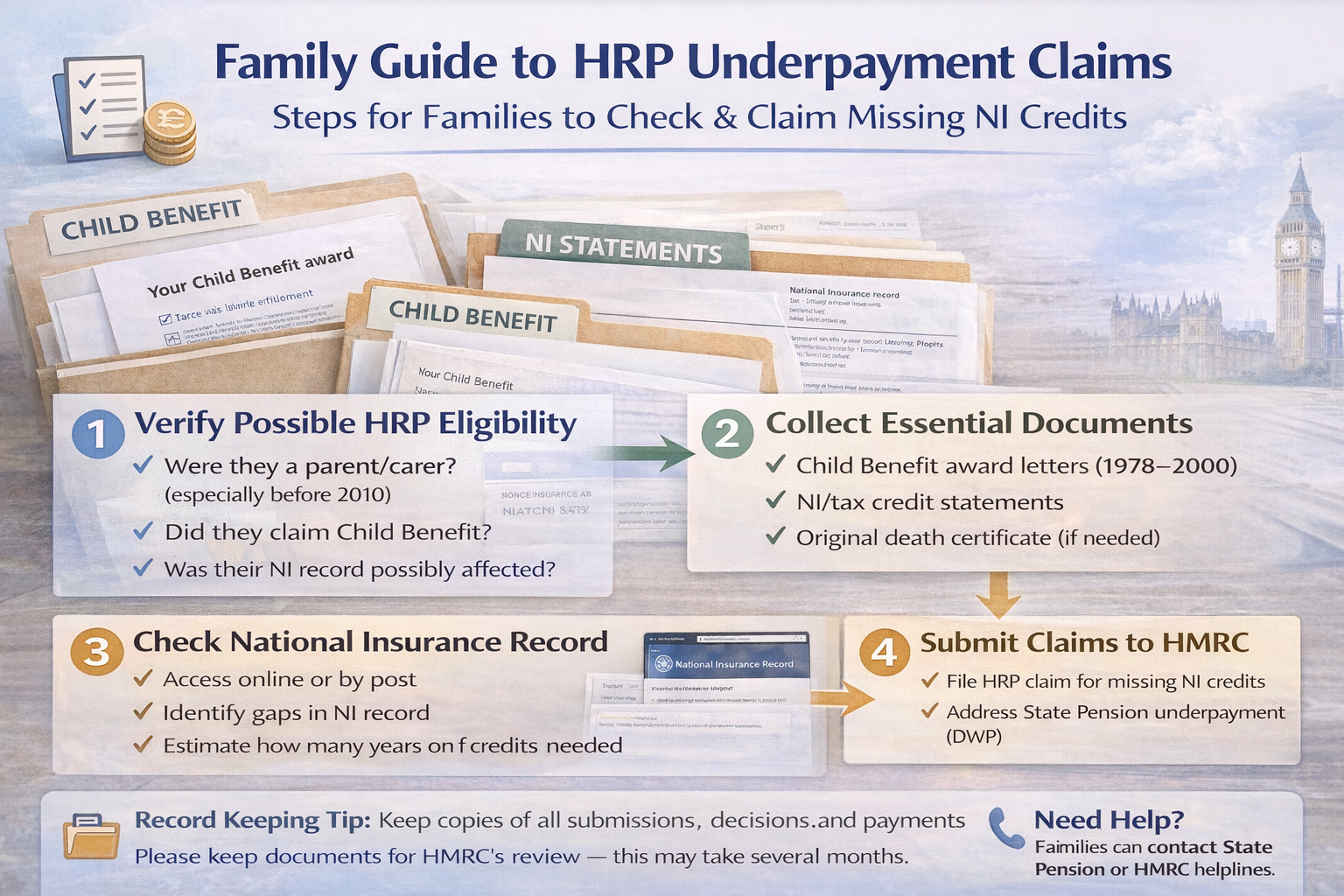
6. What to do today (in the right order)
- Step 1: Check the NI record and State Pension forecast if possible. Mark any years that look incomplete.
- Step 2: If caring/Child Benefit overlaps with missing years, follow GOV.UK guidance to apply for HRP or request corrections.
- Step 3: Keep copies of everything and note dates. Use a simple folder system (paper or digital).
- Step 4: If you get a request for more information, reply promptly and keep a copy of what you send.
CTA: Check eligibility in 60 seconds
Important note
This guide is general information, not legal advice. Eligibility and outcomes depend on individual records and Government decisions. Always refer to GOV.UK for the official process and current forms.